Category: Uncategorized

  • Using Accessories to Add Personality to Everyday Style

    Personal style is often built through details. While clothing provides the foundation of an outfit, accessories can introduce texture, contrast, and individuality without requiring dramatic changes. A simple chain, ring, bracelet, belt, or watch can completely change the way an otherwise basic outfit feels.

    This is especially true in casual, streetwear, punk, biker, and alternative fashion, where metal accessories are often used to create a stronger visual identity.

    Why Small Details Matter

    A well-planned outfit does not always need multiple layers or bold colors. Sometimes a few carefully chosen details are enough to make clothing feel more distinctive.

    Accessories are useful because they can be moved between outfits easily. A favorite chain or bracelet might work with jeans and a T-shirt one day, then with cargo pants and a jacket the next.

    This flexibility allows people to experiment with personal style without constantly buying new clothes.

    Adding Interest Around the Waist

    The waist and pocket area is an ideal place to introduce an accessory because it naturally draws attention without overwhelming the rest of the outfit.

    Chains attached to belt loops can add movement and metallic contrast, particularly when worn with darker jeans or neutral-colored trousers. For those interested in this type of look, a thoughtfully designed pants chain mens accessory can provide an easy way to introduce a street-inspired or alternative edge while still remaining practical enough for everyday wear.

    Depending on the design, the effect can range from subtle to bold.

    Choosing the Right Chain

    Chain thickness is one of the biggest factors in determining the overall appearance.

    A narrow chain creates a cleaner, more understated look. Medium-weight chains offer a noticeable accent without becoming the main focus of the outfit. Heavier chains, on the other hand, work particularly well for people who prefer punk, gothic, biker, or industrial-inspired styles.

    Length also matters. Shorter chains stay close to the hip and tend to appear more refined, while longer chains create more movement and visual impact.

    Pairing Chains With Denim

    Denim is one of the easiest fabrics to style with metal accessories.

    Classic blue jeans create a relaxed look, while black jeans can provide a sharper contrast with silver or polished metal. Distressed denim can further emphasize a rugged or alternative aesthetic.

    A straightforward combination might include:

    • Straight or relaxed-fit jeans
    • A plain T-shirt
    • Sneakers or boots
    • A casual jacket
    • One metal chain accessory

    Keeping the clothing relatively simple gives the accessory enough room to stand out naturally.

    Styling With Cargo Pants

    Cargo pants also work particularly well with chains because their utility-inspired design already includes pockets, seams, and other structural details.

    A chain can reinforce that functional appearance while giving the outfit additional texture. Neutral shades such as black, olive, gray, or beige can provide a versatile foundation.

    Pairing cargo pants with an oversized shirt, hoodie, or lightweight jacket can create an effortless streetwear look without requiring too many accessories.

    Coordinating Other Jewelry

    When wearing a chain around the waist, consider how it interacts with other jewelry.

    Metal finishes do not have to match perfectly, but repeating similar tones can make the overall outfit appear more intentional. Silver-tone chains, for example, can pair naturally with stainless steel watches, simple rings, or bracelets.

    If the waist chain is particularly large or detailed, keeping other jewelry minimal can create better balance.

    Alternatively, someone who prefers a more expressive style may choose several complementary metal accessories to build a stronger visual theme.

    Think About Comfort and Durability

    Accessories worn around the waist experience regular movement throughout the day, so durability should be considered alongside appearance.

    Strong clasps, secure connections, and quality metal construction can help prevent the chain from coming loose during everyday activities. The accessory should also be light enough to remain comfortable when walking or sitting.

    A chain that looks impressive but constantly catches on objects or feels excessively heavy may quickly become inconvenient.

    Choosing the right proportions can provide both style and practical wearability.

    Making an Outfit Feel Personal

    Fashion becomes more interesting when it reflects individual preferences rather than simply copying trends.

    Someone might prefer a subtle chain worn with clean denim, while another person may combine heavier accessories with boots, graphic shirts, and layered outerwear. Both approaches can work when the individual pieces feel connected.

    Experimenting with different chain lengths, materials, and clothing combinations can help determine what feels most natural.

    Building Style Through Accessories

    Developing a recognizable personal style does not necessarily require an expensive wardrobe. Accessories make it possible to change the character of familiar clothing with relatively small adjustments.

    A chain, belt, watch, or distinctive piece of jewelry can become a recurring element that helps tie different outfits together.

    By focusing on balance, comfort, and thoughtful coordination, even basic clothing can feel more expressive. Ultimately, the best accessories are those that enhance an outfit while fitting naturally into the wearer’s everyday style.


  • My New Web Series

    My New Web Series

    Check out my new web series – Flavors –  https://youtu.be/cWOF1tpyjy8  and subscribe to our youtube channel http://tinyurl.com/theLBSisters .

  • Keep Getting Shit Done

    Keep Getting Shit Done

    If I’m idle, something is wrong. It is rare that I have not scheduled myself to fill every waking moment of the day…some might say over scheduled. I jest that my gravestone will say: ”Wait, I’m not done yet!” My life is about getting shit done. Why?

    In a profession where I am not punching a clock. I see my job as getting the next job. And I figure if I don’t have the next job there are infinite ways to get it, and only one reason, I haven’t gotten it.I haven’t worked hard enough to get shit done!

    The fun part for me is the variety of things which I consider the shit:

    -Having lunch with friends/colleagues with whom I can discuss ideas, share info, offer my support.
    -Staying current with the industry by viewing and reading.
    -Planning and executing projects that I Initiate.
    -Prepping and doing the jobs I am hired to do.

    So what’s your thing to do to get shit done?
    If you integrate work and life, getting shit done can be fun.

  • DRIVING

    DRIVING

    I started a Lean In circle recently with a directing colleague I met at the Warner Bros. directing workshop. I’ve been examining just when it is that I do or don’t “lean in” and take my place at the table where I belong. I decided to start with something simple: the way I drive.

    I can’t actually control the road but I can make well-strategized decisions about my journey…. So when traffic is at a standstill, I’m not waiting anymore; I’m moving forward, even if it means detouring out of my way to find a street with less traffic. And when I’m behind that slowpoke in the left lane on La Brea, I’m switching lanes and going around him. And no more being timid when I’m making a left at an intersection … if there is room for me to make it between oncoming cars. I’m going!

    It’s time to focus.
    It’s time to move forward.
    It’s time to reach that destination.

  • CHEMISTRY

    CHEMISTRY

    I know it when I see it onscreen. I can’t help but notice it when I’m near two people who have it. It’s palpable when I have it with someone else. And I’m not talking about that urge to jump into bed with someone. Although chemistry, I’m sure fuels that in all of us, in this case, I’m talking about that attraction at a molecular level that makes us feel more alive in another person’s presence.

    Last night, decades after I graduated, I unexpectedly ran into my favorite teacher from college. It was like being struck by a lightning bolt. It was still there…that thing that made me love his acting class, that enthusiasm he ignited that fuels my passion for directing, that…chemistry.

    So that got me thinking about being around people with whom I don’t have chemistry, those folks who don’t make me feel great, who don’t feed my enthusiasm, who suck the energy out of me. And I realized that when it’s a choice –when I can select the people I have around me– I’m going to indulge that feel-good junkie inside of me and go for the chemistry.

    Who does that for you?

  • FUCK FEAR

    FUCK FEAR

    “With fear, learning stops,” Bob Koherr, a fellow sitcom director, reminded me and a room with other DGA members recently. I’ve blogged about fear before—how it can be your friend. But Bob’s statement prompted me to think about fear again and reexamine how I overcome it. I realized that I have several strategies to draw on, depending on the circumstances. Sometimes it helps me to review them when I don’t know how to get around the fear, and this leads to a solution. Here‘s where I begin to manage it so I can fight back:

    • Ambition: If I want something badly enough I can dodge my fear in pursuit of the greater goal.
    • Dissection: I peel and separate fear, break it down, until it’s more manageable.
    • Capitulation – up to a point: I fall down hard but stand back up, because, well, nothing else is working.
    • Anger: I attack the fear and just say, “Fuck fear!”
    •  
      I’d love to hear what scares you…and what you come up with to fight back! Catalysts? Triumphs? All strategies and ideas welcome

  • Say YES

    Say YES

    “Ask a busy person . . .” It makes sense. A busy person already has a reputation for saying yes. And odds are he/she will again. But I want to talk about the reflex of saying no.

    Why do people do that? Who wants the rep of being the negative one? You say no to me once, I will hesitate to ask you again.

    Recently I was chatting with an actress who recommends other actors for a play-reading series. She said that the actors who hesitate or insist on reading the play before committing have already lost the opportunity. She moves on to the next choice.

    People whose initial instinct is to ponder, consider, and weigh disappoint me. It is so opposite to how I operate. My gut response is not “Why?”; it’s “Why not?” Now, I’m not suggesting jumping in blindly; that’s just stupid. But once I’ve considered the source and the source is solid, I feel flattered they asked me . . . and that just makes me feel good about myself. I like being the go-to girl.

    And I adopt the same attitude when I’m directing, juggling my schedule to accommodate requests, constantly revising and assessing my day. What can I say, I’m greedy—and I suggest you be too.

    So say yes. Say, “When?” Say, “I’d love to!”

  • Always Ask

    Always Ask

    I hate asking for help. I don’t know if it’s not wanting to impose, not wanting to be beholden, or just fearing that someone might say no. But I learned a great lesson when I was recently producing three Santa Monica Cares shorts, about services that help the homeless, a project co-sponsored by the DGA’s Women’s Steering Committee and CityTV of Santa Monica.

    Here’s what I found out: People like to help if they can. It makes them feel good. And if they can’t, they say no … but you won’t know unless you try.

    The secret is finding the best way to ask. My favorite opening is, “No is a perfectly acceptable answer to this request.…” It takes guilt out of the equation.

    Being clear and concise is also essential. Be very specific about what you need, how much time it will take, if any costs are involved, what the time frame is, and if there is any take-away for the giver.

    Finally, after you receive something, don’t take the gift and run. Be sure to thank, and then thank again. Make sure as well to let the giver know of specific benefits — no matter how many days, months, or years later — you may have derived as a result of their generosity.

    And now, taking my own advice, here’s a shout-out to Jeff Saver for the glorious music he wrote for Santa Monica Cares and to Marsha Mercant for dropping everything and recording the last-minute voice-overs, he even worked on online mixing to get the final touches. You both rock!

  • The Job

    The Job

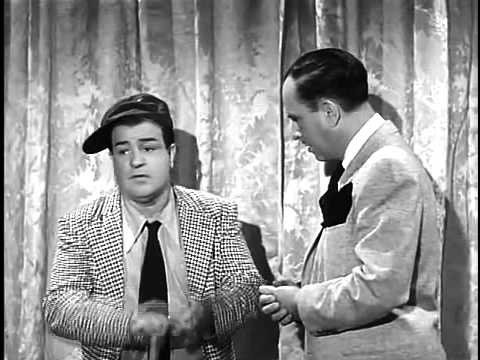
    I was directing a scene . . . an homage to Abbot and Costello’s fabulous “Who’s on First.”  (And if you’ve never seen that skit, stop reading this RIGHT NOW watch it!  I mean it—watch it NOW!) 

    Amazing, right?  Back to my class.

    The actor playing Charlie couldn’t get the emphasis correct on his second line.

    Actor/CHARLIE
    I figure we’ll take them out for an early dinner, then  . . .

    Actor/ALAN
    Then what?

    Actor/CHARLIE
    Then what what?

    I tried to help. 

    Me
    You’re really asking, “Then which what?”

    Charlie tried. Wrong. 

    Me
    Why don’t you actually say that?

    Actor/CHARLIE
    What?

    Me
    “Then which what?” Say that instead of “Then what what?”

    It went on from there. I won’t put you through the tedious process. You get the picture…He finally got it.

    So here’s what directing comes down to: 

    • The job is getting the job done right.
    • It is sometimes tedious.
    • But it’s not done until the actor gets it right.
    • And then when he does, it feels great.
    • You just have to love the job of getting the job done right.
  • Dick

    Dick

    I hate censorship, but as a teacher at USC’s School of Cinematic Arts, I have to use good judgment in the classroom.

    That’s why I had to pause and think for a second when I was teaching a comedy directing class and one of my students wanted to give an example that would illustrate the subject we were talking about: how switching the emphasized word changes the entire meaning of a sentence. She hesitated because she said the language might not be appropriate.

    So I asked her, “Is it funny?”

    She assured me it was . . . and it was a great example that would be memorable. 

    So I figured . . .  

    • Everybody was over 18.
    • We WERE discussing comedy in a sitcom directing class.
    • It could be dialogue, spoken by a character who might use it for shock value, no matter how inappropriate.
    • And if it was memorable—and funny—every student would remember how changing the emphasized word irrevocably changes the meaning of the sentence.

    So I told her to go ahead and share the example. Here’s what she said: “I didn’t suck his dick.” And she continued. “I didn’t suck his dick. I DIDN’T suck his dick. I didn’t SUCK his dick. . . . ” Laughter ensued. Lesson unforgettably learned.